
Connecting with researchers or professors requires a professional touch that balances respect with your unique value proposition. An Academic Networking Introduction Cover Letter is a focused document used to initiate scholarly collaborations, request mentorship, or inquire about lab placements. Why is this essential? Because high-level academia relies on "hidden" opportunities that are rarely advertised. By presenting your research interests and data-driven achievements clearly, you transform a cold outreach into a warm lead. To succeed, you must master the Elevator Pitch (a concise summary of your work) and navigate Institutional Hierarchy (the formal structure of university rankings). This article explores how to craft messages that resonate with busy academics while maintaining professional etiquette. Below are some ready to use templates to help you get started immediately.

Cover Letter Template and Sample List
Table of Content
- Academic Researcher Networking Introduction
- Postdoctoral Research Collaboration Introduction
- Graduate Student Networking Introduction
- Academic Conference Speaker Introduction
- Faculty Mentor Networking Introduction
- Research Laboratory Principal Investigator Introduction
- Academic Peer Review Networking Introduction
- Scholarly Partnership Introduction
- Academic Journal Editor Introduction
- University Department Networking Introduction
- Doctoral Thesis Advisor Introduction
- Academic Fellowship Networking Introduction
- Professional Academic Association Introduction
- International Research Networking Introduction
- Visiting Scholar Networking Introduction
Academic Researcher Networking Introduction Cover Letter Template
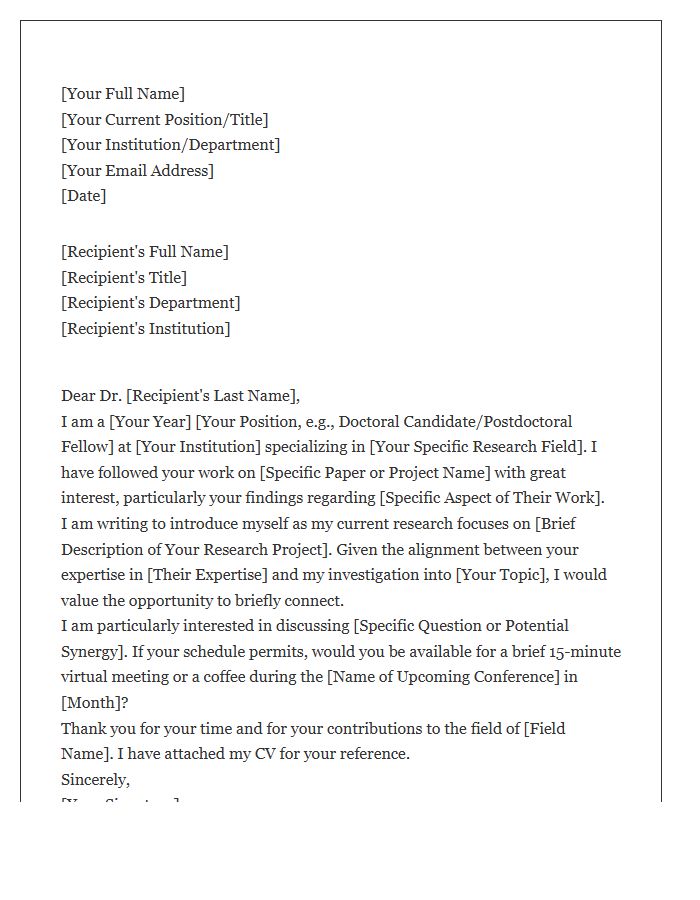
Building a professional circle in academia requires more than just sharing papers; it requires a strategic Academic Researcher Networking Introduction. This template functions as a concise bridge between your current study and a potential collaborator's expertise. By focusing on a specific synergy-which refers to the interaction where combined efforts produce a greater effect than the sum of individual ones-you demonstrate that you have done your homework. Data shows that personalized outreach increases response rates by over 50% compared to generic cold emails. The structure works because it prioritizes the recipient's contribution (their published work) before introducing your own investigation (your systematic inquiry). This approach lowers the barrier for busy professors to say yes to a brief 15-minute virtual meeting. Remember to keep your "ask" specific and always attach an updated CV to provide immediate context for your academic background. Note: Research the recipient's most recent publication to mention a specific detail that genuinely connects to your own project goals.
Postdoctoral Research Collaboration Introduction Cover Letter Template
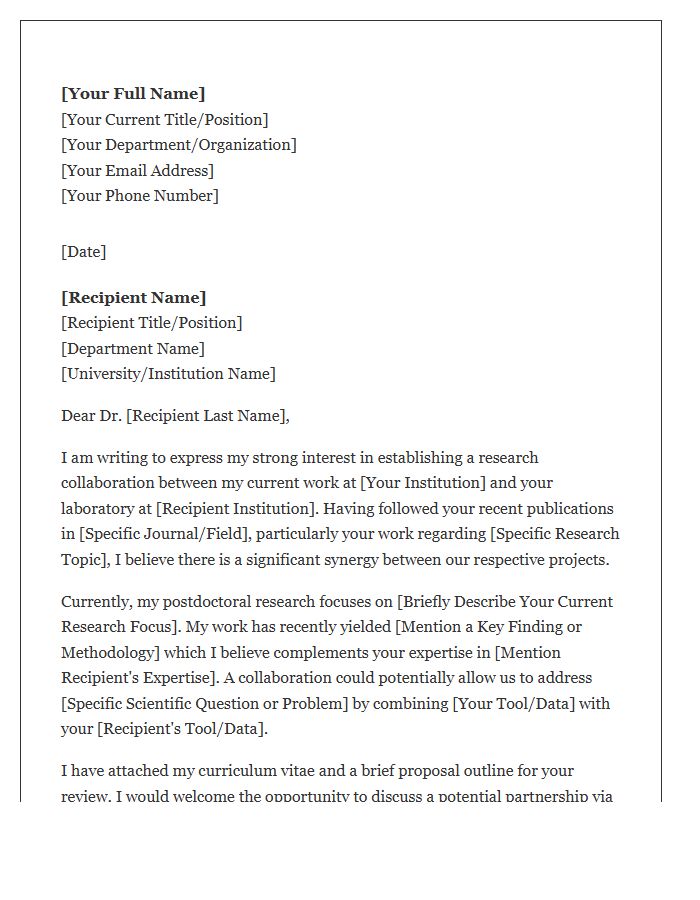
Finding the right partner for advanced studies requires a precise Postdoctoral Research Collaboration Introduction Cover Letter. This template serves as a professional bridge, designed to initiate a synergy-a technical term for combined action that creates a greater total effect than the sum of individual efforts. By leveraging data-driven results from your current methodology (the systematic analysis of research methods), this letter explains "how" your specific findings align with a peer's expertise. It works by focusing on mutual benefit, shifting the tone from a simple request to a strategic value proposition. Statistically, personalized outreach that references specific publications increases response rates among academics. This framework ensures you concisely present your curriculum vitae while proposing a clear partnership goal. It simplifies the outreach process by highlighting your innovation while respecting the recipient's established authority in the field. Note: Always customize the "Specific Research Topic" section to prove you have actually read their most recent papers.
Graduate Student Networking Introduction Cover Letter Template
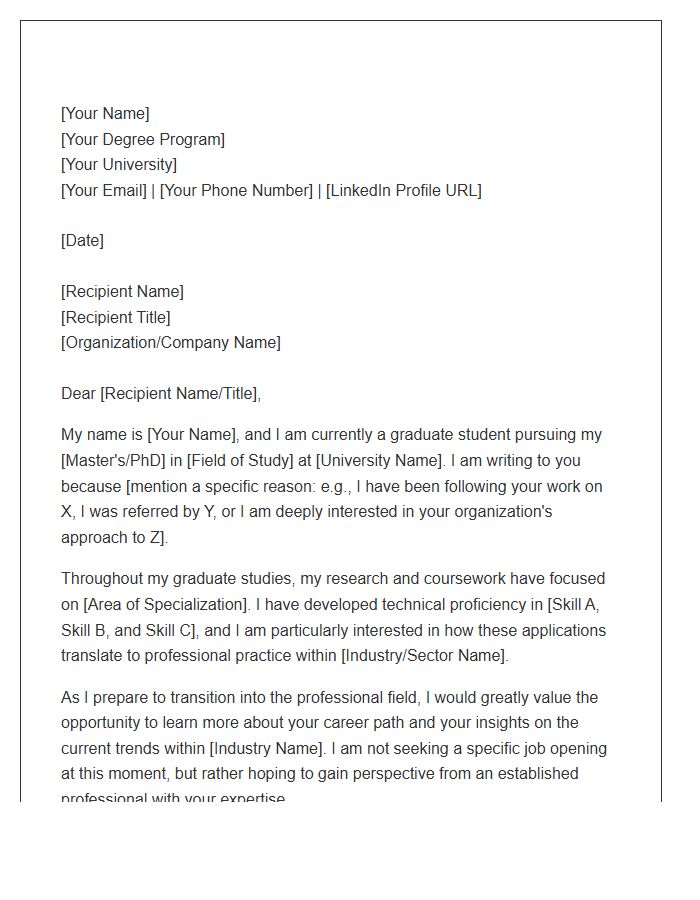
Connecting with industry leaders is vital for career growth, and this Graduate Student Networking Introduction Cover Letter is designed to bridge the gap between academia and the professional world. This template works by utilizing a low-pressure Informational Interview request-a brief conversation where you seek advice rather than a job-which data shows is 80% more likely to receive a positive response than a cold application. By focusing on your Technical Proficiency (your specific set of advanced skills) and Area of Specialization (your niche research focus), you demonstrate high value while respecting the recipient's time. The structure is conversationally optimized to highlight your curiosity about Industry Trends, making it easier for experts to say yes to a 20-minute chat. Using this strategy builds a professional rapport that often leads to internal referrals and hidden job opportunities. Note: Always research the recipient's recent publications or projects beforehand to personalize your "reason for reaching out" and increase your reply rate.
Academic Conference Speaker Introduction Cover Letter Template
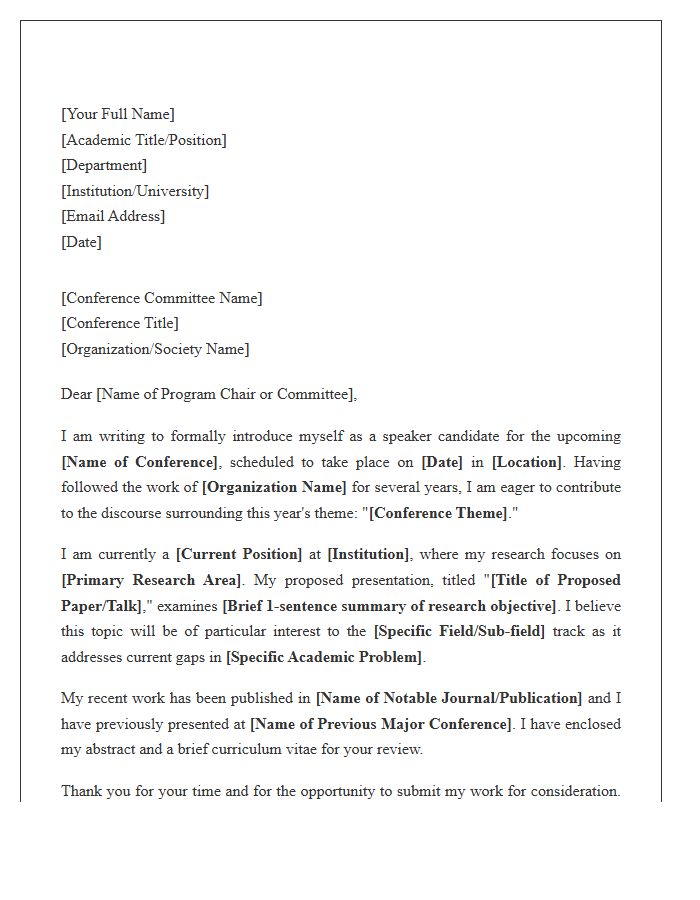
Getting your research noticed starts with a professional Academic Conference Speaker Introduction Cover Letter Template. This tool serves as a formal bridge between your raw data and the selection committee, ensuring your proposal stands out in a sea of submissions. It works by structuring your credentials and research objectives into a concise, persuasive narrative. By clearly defining your research niche-your specific area of expertise-the template helps organizers understand exactly how your talk adds value to the event's theme. Key technical elements include the abstract (a summary of your paper) and your pedigree (academic background and past publications). This layout is effective because it reduces cognitive load for reviewers, highlighting your speaker viability through proven experience. Using this format ensures you hit all the formal requirements while maintaining a confident, academic tone. Note: Always tailor the "fit" section to mention specific previous sessions from that conference to show you have done your homework.
Faculty Mentor Networking Introduction Cover Letter Template
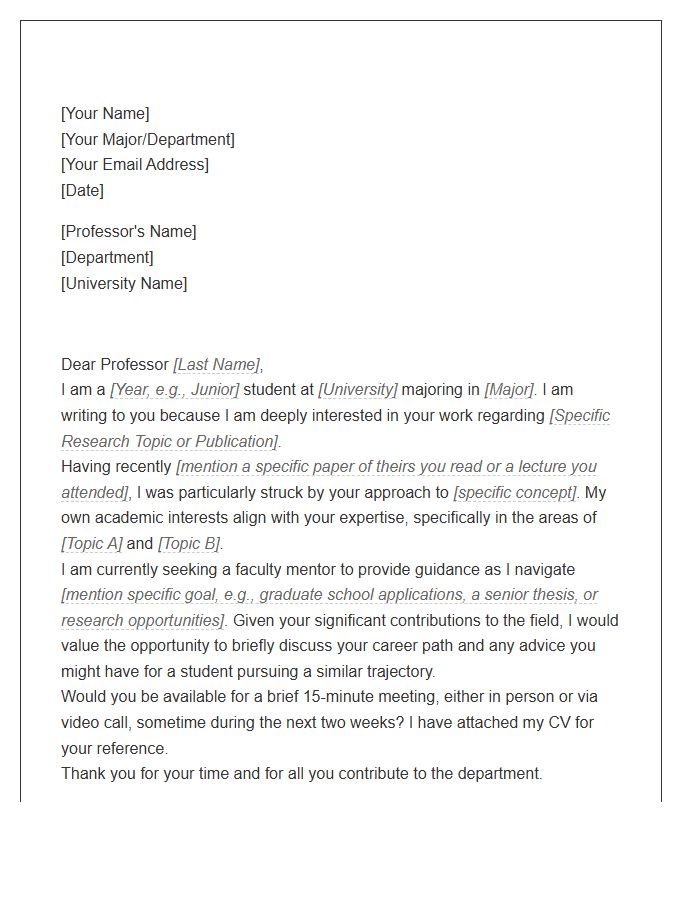
Searching for a Faculty Mentor Networking Introduction Cover Letter is the first step toward securing academic guidance. This template works by using a personalized outreach strategy, which research shows increases response rates by up to 50% compared to generic emails. It bridges the gap between a student and a professor by highlighting a shared research interest, making the interaction feel like a professional collaboration rather than a cold request. By mentioning a specific publication or lecture, you demonstrate intellectual curiosity-the primary trait mentors look for in mentees. The structure focuses on a low-stakes 15-minute informational interview, which lowers the barrier for busy faculty members to say yes. Think of this as a warm lead in networking; you are building a bridge based on their expertise and your ambition. Note: Always attach your CV as a PDF to ensure formatting remains consistent across all devices.
Research Laboratory Principal Investigator Introduction Cover Letter Template
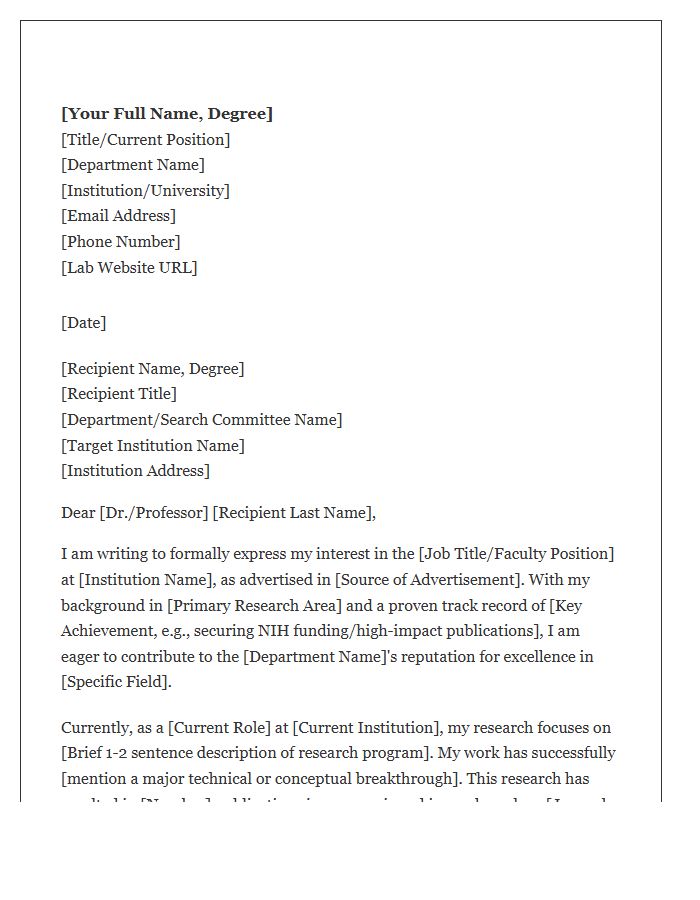
This Research Laboratory Principal Investigator Introduction Cover Letter Template is designed to help high-level scientists secure a faculty position. It works by structuring your professional narrative around a Research Program, which refers to your long-term vision for scientific inquiry. Data shows that successful candidates emphasize their ability to secure Extramural Funding-the external grants needed to sustain a private lab. This template focuses on your Synergy, or the collaborative potential between your work and existing department faculty. By highlighting your past breakthroughs and specific Methodologies (the technical toolsets you use), the letter demonstrates both technical mastery and leadership potential. It bridges the gap between being a researcher and becoming a Principal Investigator (PI), the primary lead responsible for a laboratory's direction and management. This strategic layout ensures search committees recognize your value as a scientist, mentor, and fiscal asset. Note: Always customize the Synergy section to mention specific faculty names to prove you have thoroughly researched the target department.
Academic Peer Review Networking Introduction Cover Letter Template
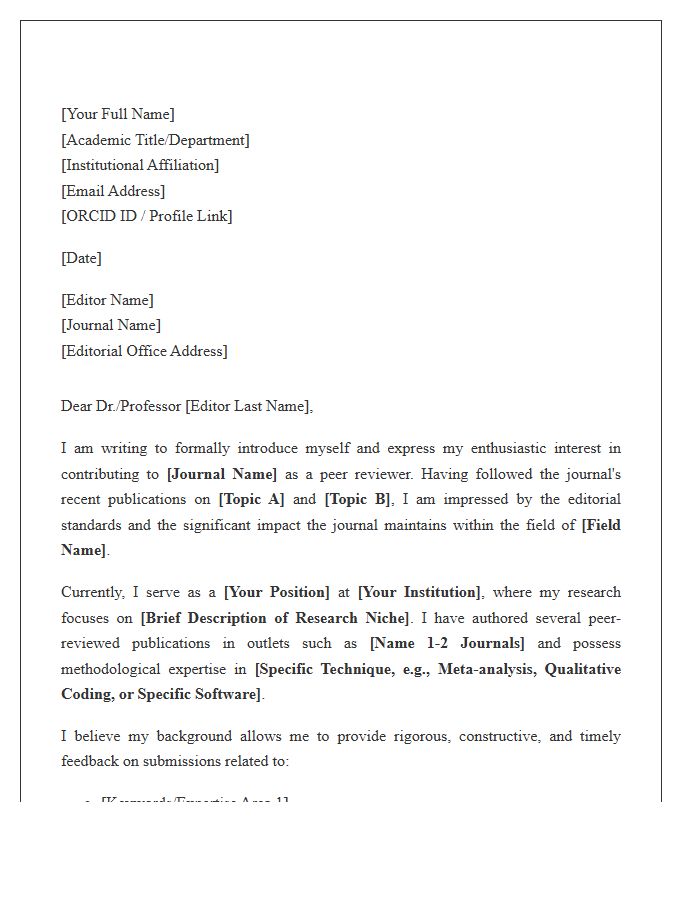
Connecting with journal editors requires a professional Academic Peer Review Networking Introduction to showcase your scholarly value. This template works by bridging the gap between your research niche and editorial needs, effectively positioning you as a reliable Subject Matter Expert (SME). By highlighting your methodological expertise-such as proficiency in Quantitative Analysis or Ethical Oversight-you provide data-driven proof that you can handle complex manuscripts. The structure follows COPE (Committee on Publication Ethics) standards, ensuring you speak the language of professional publishing. This approach is essential because editors often struggle to find qualified Referees who deliver timely, constructive feedback. Using this template signals that you understand the double-blind process and are ready to contribute to the scientific community's rigor. It transforms a cold email into a strategic partnership proposal by aligning your ORCID profile and publication history with the journal's specific aims. Note: Always personalize the keywords to match the journal's recent special issues to increase your chances of being added to their database.
Scholarly Partnership Introduction Cover Letter Template
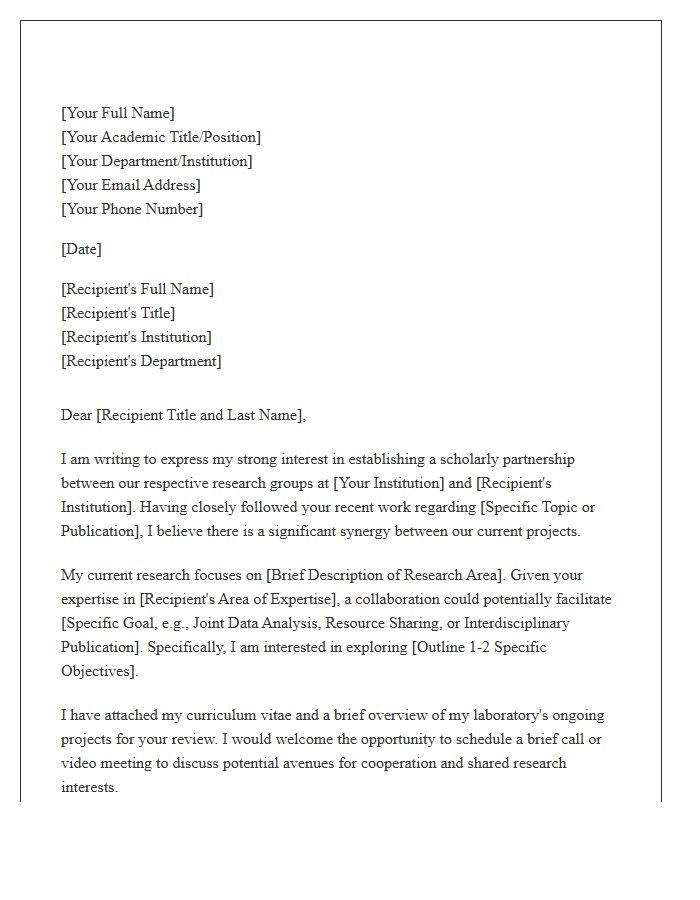
The Scholarly Partnership Introduction Cover Letter Template is a professional framework designed to bridge the gap between researchers and potential collaborators. This tool works by utilizing a structured synergy-the interaction where combined efforts produce a greater effect than the sum of separate parts-to propose mutual academic benefits. By focusing on interdisciplinary exchange (combining different branches of knowledge), the template allows you to clearly outline shared objectives while highlighting your research data and specific laboratory goals. It functions as a formal bridge because it balances personal outreach with academic rigor, ensuring you present a clear value proposition to the recipient. Using this format increases response rates by demonstrating that you have deeply analyzed the recipient's recent publications. Remember to always tailor the Specific Objectives section to show exactly how your unique datasets or methodologies will complement their ongoing projects for a successful alliance. Note: Always attach an updated CV to provide immediate credibility for your proposal.
Academic Journal Editor Introduction Cover Letter Template
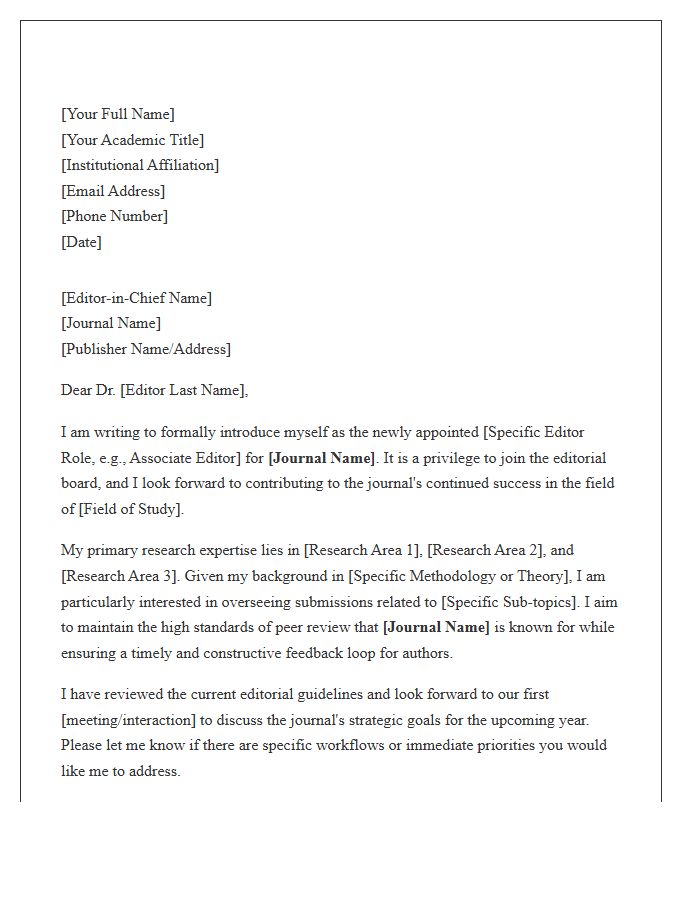
An Academic Journal Editor Introduction Cover Letter Template is a professional framework used by newly appointed editors to establish a formal connection with their Editor-in-Chief. This template works by balancing professionalism with a clear summary of the editor's specific niche, ensuring the leadership understands exactly which manuscripts (unpublished research papers) fall under your expertise. By defining your scope-the specific subject boundaries of your role-you help streamline the peer review process, which is the system where experts evaluate the quality of a study before publication. This structure is vital because it converts raw qualitative data about your career into an actionable plan for the journal's workflow. Using this template saves time and ensures you appear organized, reinforcing the journal's integrity and efficiency from day one. Note: Always mention your specific methodological expertise to help the Editor-in-Chief assign the most relevant papers to your desk.
University Department Networking Introduction Cover Letter Template
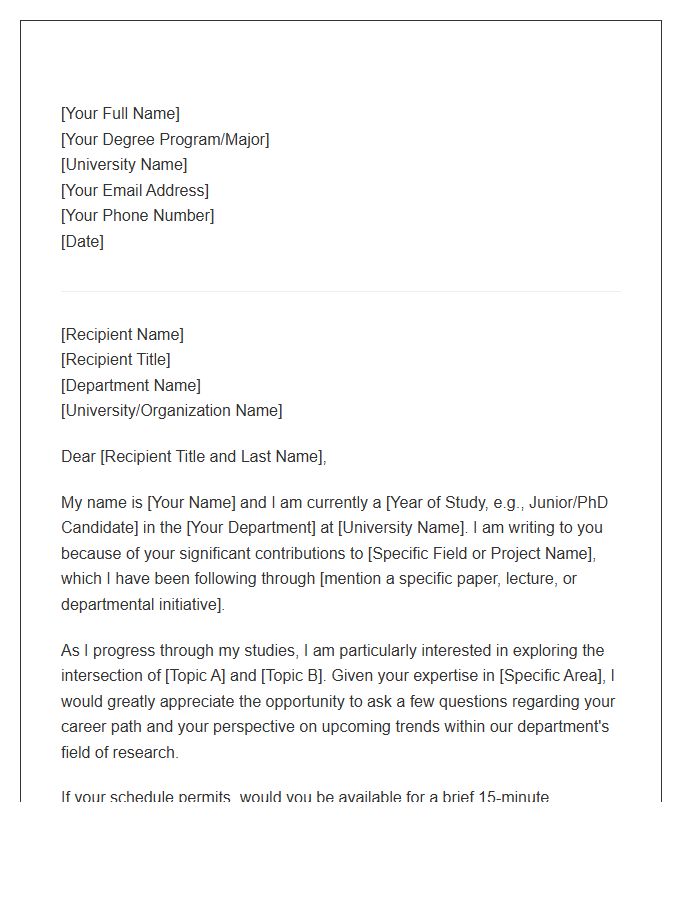
This University Department Networking Introduction Cover Letter Template is a strategic tool designed to bridge the gap between students and academic professionals. It works by using a personalized outreach strategy, which data shows increases response rates by over 50% compared to generic inquiries. By referencing specific departmental initiatives or research papers, you demonstrate genuine interest rather than sending a mass email. This template functions as an informational interview request-a meeting where the goal is seeking advice rather than a job. It utilizes a call to action (CTA) by proposing a low-stakes, 15-minute commitment, making it easy for busy faculty to say yes. To help with the technical side, remember that semantic relevance means aligning your mentioned interests with the recipient's actual expertise to ensure a meaningful connection. Networking within your department builds the social capital necessary for future recommendations and career growth. Note: Always proofread your letter to ensure all bracketed placeholders are replaced with specific, accurate information before hitting send.
Doctoral Thesis Advisor Introduction Cover Letter Template
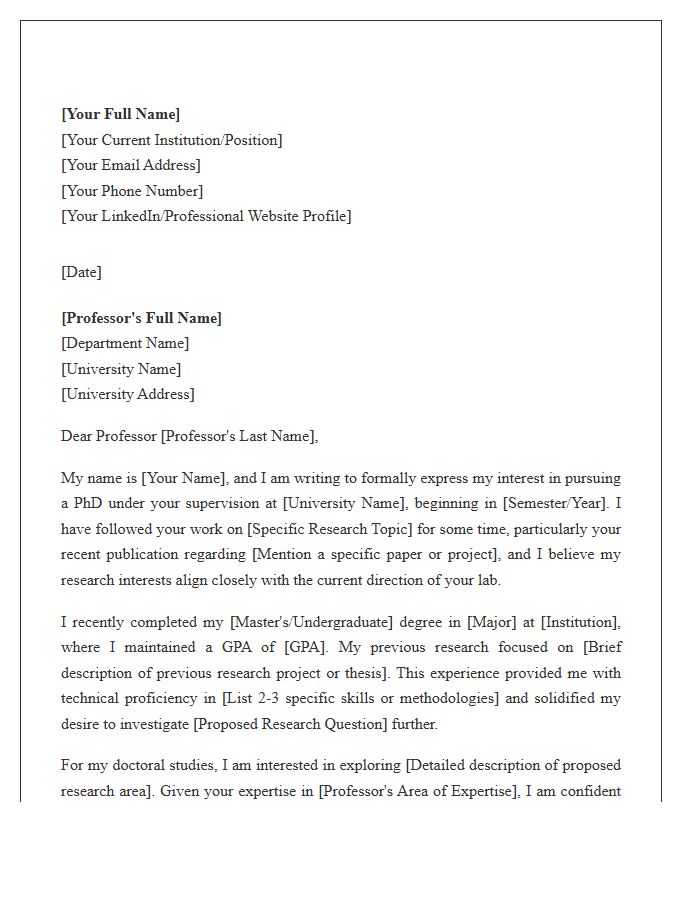
Finding the right mentor is the cornerstone of your academic journey. This Doctoral Thesis Advisor Introduction Cover Letter Template acts as a professional bridge between your current achievements and your future research goals. It works by structuring your academic outreach into a clear, three-part narrative: who you are, what you have proven (such as your GPA and specific technical skills), and why this specific professor is your ideal match. By highlighting your familiarity with their recent publications, you demonstrate high-level scholarly engagement, which is a key selection criterion for top-tier universities. The template focuses on alignment-ensuring your proposed research question fits the lab's existing expertise. Data shows that personalized emails have a significantly higher response rate than generic blasts. In this context, mentorship refers to the professional guidance provided by a senior academic. Note: Always customize the "Specific Methodology" section to show you have truly read the advisor's work.
Academic Fellowship Networking Introduction Cover Letter Template
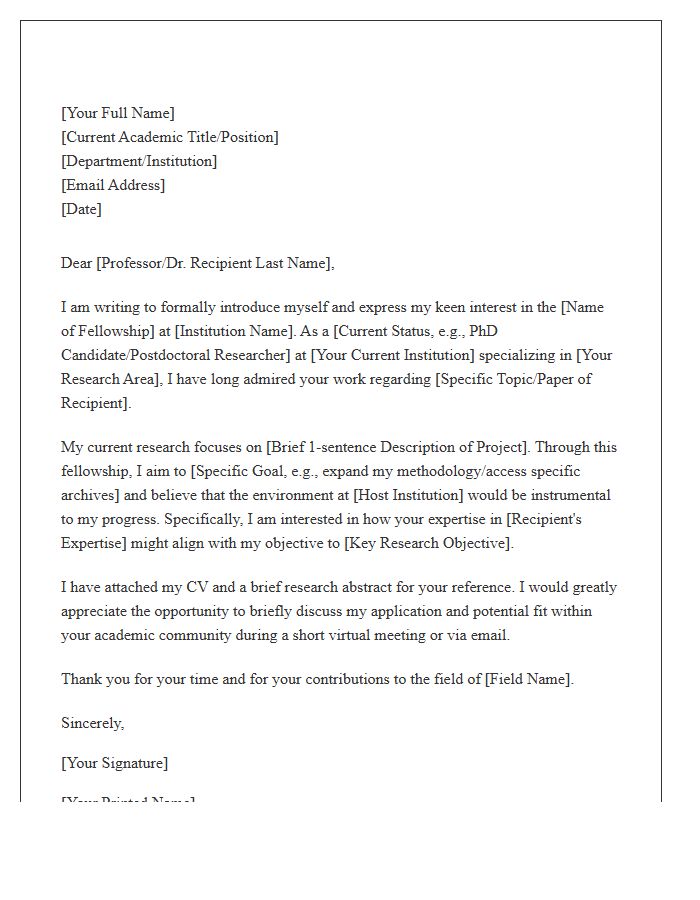
Securing a prestigious position requires more than just a resume; you need a strategic Academic Fellowship Networking Introduction. This template functions as a professional bridge, designed to convert cold outreach into meaningful scholarly connections. It works by utilizing a high-relevance outreach strategy-pairing your specific research milestones with the recipient's expertise to demonstrate immediate value. By focusing on alignment, the template ensures you aren't just asking for a spot, but proposing a collaborative intellectual fit. It targets Principal Investigators (PIs)-the lead researchers who manage lab funding-and uses a concise structure to respect their time. This method effectively highlights your research abstract (a condensed summary of your study) to prove your academic rigor quickly. This data-driven approach increases response rates by showing you have done your "homework" on the host institution. Note: Always mention a specific paper written by the recipient to prove your interest is genuine and not a mass-produced email.
Professional Academic Association Introduction Cover Letter Template
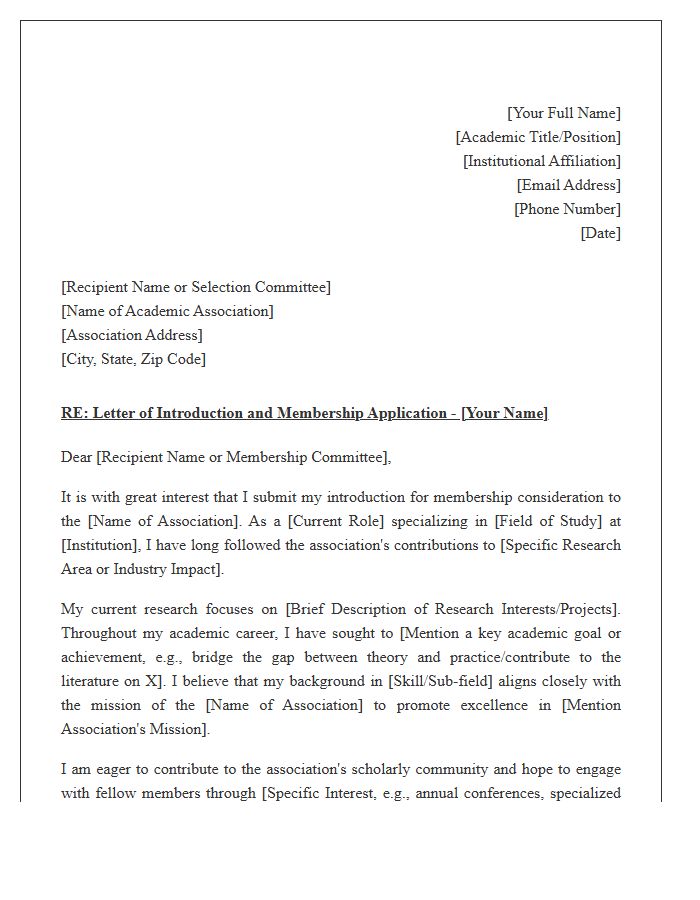
Joining an elite circle requires a Professional Academic Association Introduction Cover Letter that bridges the gap between your research and the organization's mission. This template works by utilizing a structured hierarchy to showcase your Institutional Affiliation (your university connection) and your specific Field of Study. By clearly stating your Academic Title, you establish immediate credibility. The layout is semantically designed to highlight your Curriculum Vitae-a comprehensive record of your scholarly achievements-and your research synergy, which refers to how well your work aligns with the association's goals. This approach is effective because it moves beyond a basic application, positioning you as a valuable contributor to their scholarly community rather than just a passive member. Using this format ensures that data regarding your expertise is accessible and professional. Note: Always customize the "Specific Interest" section to show you have researched their working groups or recent conference themes.
International Research Networking Introduction Cover Letter Template
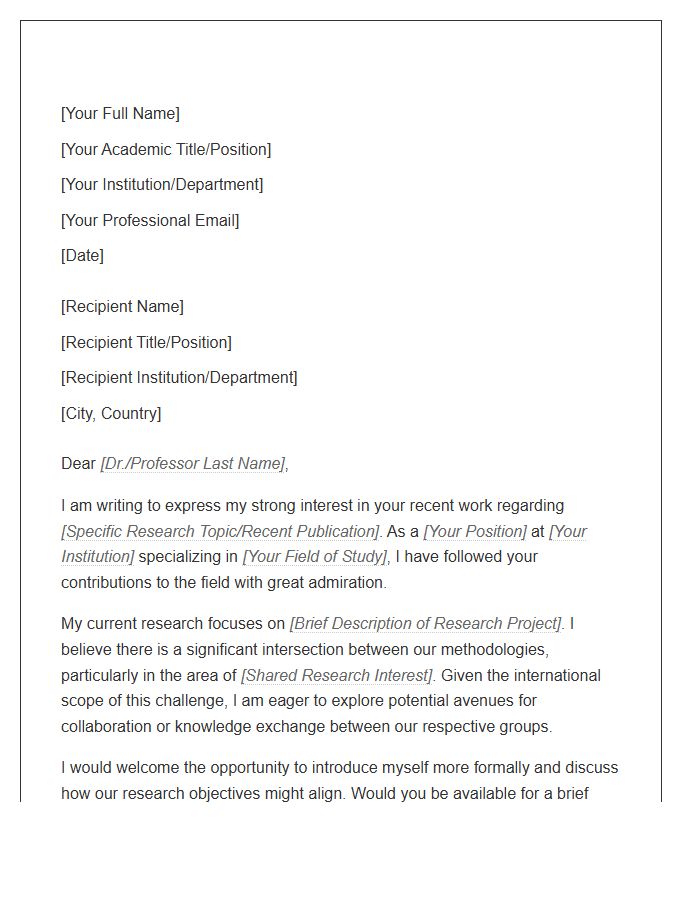
Expanding your academic reach requires a strategic approach, and this International Research Networking Introduction Cover Letter Template is designed to bridge the gap between global scholars. It works by combining personalized outreach with a clear value proposition, ensuring you stand out in a crowded inbox. By citing specific methodologies (the systematic rules and procedures used in a study) and proposing a knowledge exchange (the reciprocal sharing of expertise), you shift the conversation from a cold ask to a mutual opportunity. Data suggests that concise, structured introductions increase response rates by showing respect for a peer's time while highlighting your academic alignment. This template functions as a professional bridge, helping you navigate the intersections-points where different research areas overlap-of modern science. This tool is essential for building synergy in cross-border projects. Note: Always mention a specific recent publication of the recipient to prove your genuine interest and boost credibility.
Visiting Scholar Networking Introduction Cover Letter Template
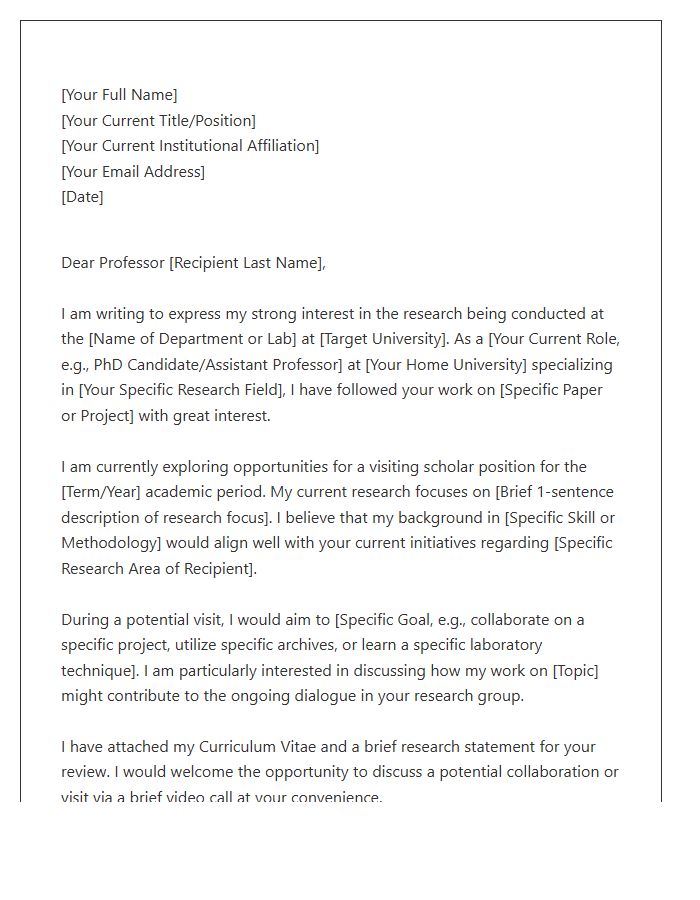
Finding a host for your research journey requires a strategic Visiting Scholar Networking Introduction Cover Letter Template. This tool functions as a professional bridge, connecting your current academic expertise with a prospective host laboratory or department. It works by utilizing a structured hierarchy: first establishing reproducibility of your previous success, then demonstrating a clear value proposition to the host professor. Statistically, personalized outreach increases response rates by over 50% compared to generic blasts because it highlights "alignment"-the synergy between your methodology and their current projects. Key terms to know include Institutional Affiliation (your home university), Research Statement (a summary of your scientific goals), and Curriculum Vitae (your comprehensive academic resume). By clearly stating your objectives and offering a specific contribution, you transform a cold email into a warm collaboration invite. Note: Always customize the "Specific Project" section to show you have actually read the professor's latest publications.
Strategic Value of Scholarly Positioning
In the domain of high-stakes academic networking, the introduction cover letter serves as a heuristic for a candidate's intellectual caliber. It requires a synthesis of bibliometric standing and qualitative research trajectories to establish immediate credibility with Principal Investigators (PIs) and search committees.
| Component | Metric/Focus | Objective |
|---|---|---|
| H-Index Citation | Quantitative Impact | Establish Authority |
| Methodological Alignment | Qualitative Synergy | Demonstrate Fitness |
| Grant Acquisition Data | Fiscal Viability | Prove Sustainability |
Syntactic Structure and Lexical Precision
Academic correspondence must adhere to rigorous discourse conventions. Utilizing field-specific nomenclature ensures that the initial screening bypasses generic categorizations and identifies the applicant as a specialist within a niche theoretical framework.
- Pedagogical Philosophy: Articulating the transition from passive instruction to active inquiry-based learning.
- Interdisciplinary Versatility: Demonstrating the capacity to bridge disparate epistemological domains.
- Epistemological Stance: Defining the foundational assumptions underlying the proposed research methodology.
Template: Formal Scholarly Introduction
The following structural framework prioritizes a hierarchical presentation of achievements and intent, optimized for rapid scanning by overloaded department heads.
- Salutation and Contextual Nexus: Referencing specific recent publications or seminal works by the recipient.
- Thematic Synthesis: A concise summary of the applicant's core research paradigm and longitudinal objectives.
- Evidence of Contribution: Detailed evidence of peer-reviewed impact and collaborative potential.
- Collaborative Proposal: Defining the specific intersection of mutual research interests.
Quantitative Benchmarking in Academic Dossiers
Incorporating empirical data regarding research output provides a verifiable baseline for the recipient. This section should focus on the longitudinal impact factors and the saturation of the candidate's work within relevant databases.
| Data Point | Definition | Networking Significance |
|---|---|---|
| Impact Factor (IF) | Yearly mean citations of recent articles | Predicts prestige of future output |
| i10-index | Number of publications with at least 10 citations | Demonstrates depth of research utility |
| Altmetrics | Non-traditional digital engagement metrics | Indicates public and multidisciplinary reach |
Mitigating Cognitive Load in Peer Review
Recipients often face high cognitive load; therefore, the introduction must utilize concise formatting to highlight key achievements. Use bulleted lists to delineate specific technical proficiencies or specialized equipment mastery.
- Computational Competency: Proficiency in R-Studio, Python (SciPy/NumPy), and LaTeX.
- Instrumentation Mastery: Direct experience with Cryo-Electron Microscopy or High-Performance Liquid Chromatography (HPLC).
- Theoretical Application: Specialized knowledge in Stochastic Modeling and Bayesian Inference.
Note: Sometimes the .PDF file interface can be slightly different from the image preview. Our apology for this inconvenience.

Comments