
Are you ready to launch your career in rehabilitation? An Entry Level Occupational Therapy Assistant Cover Letter is your first opportunity to prove you possess the clinical reasoning and empathy required for patient care. This document bridges the gap between your academic fieldwork and professional practice, showing hiring managers that you understand how to implement intervention plans effectively. By highlighting your OTA certification and hands-on experience with diverse patient populations, you demonstrate your readiness to support licensed therapists. This article explores how to showcase your technical proficiency in ADLs (Activities of Daily Living) and documentation while maintaining a patient-centered tone. To help you secure that first interview, below are some ready to use cover letter templates tailored for new graduates.
Cover Letter Template and Sample List
Table of Content
- Entry Level COTA For Pediatrics
- New Graduate Occupational Therapy Assistant
- Entry Level Occupational Therapy Assistant For Skilled Nursing
- Acute Care Occupational Therapy Assistant
- Entry Level School Based Occupational Therapy Assistant
- Home Health Occupational Therapy Assistant
- Geriatric Occupational Therapy Assistant For Beginners
- Entry Level Outpatient Rehab Occupational Therapy Assistant
- Inpatient Rehabilitation Occupational Therapy Assistant
- Mental Health Occupational Therapy Assistant
- Early Intervention Occupational Therapy Assistant
- Pediatric Clinic Occupational Therapy Assistant
- Physical Dysfunction Occupational Therapy Assistant
- Hospital Based Entry Level Occupational Therapy Assistant
- Entry Level Occupational Therapy Assistant For Assisted Living
Entry Level COTA Cover Letter Template For Pediatrics
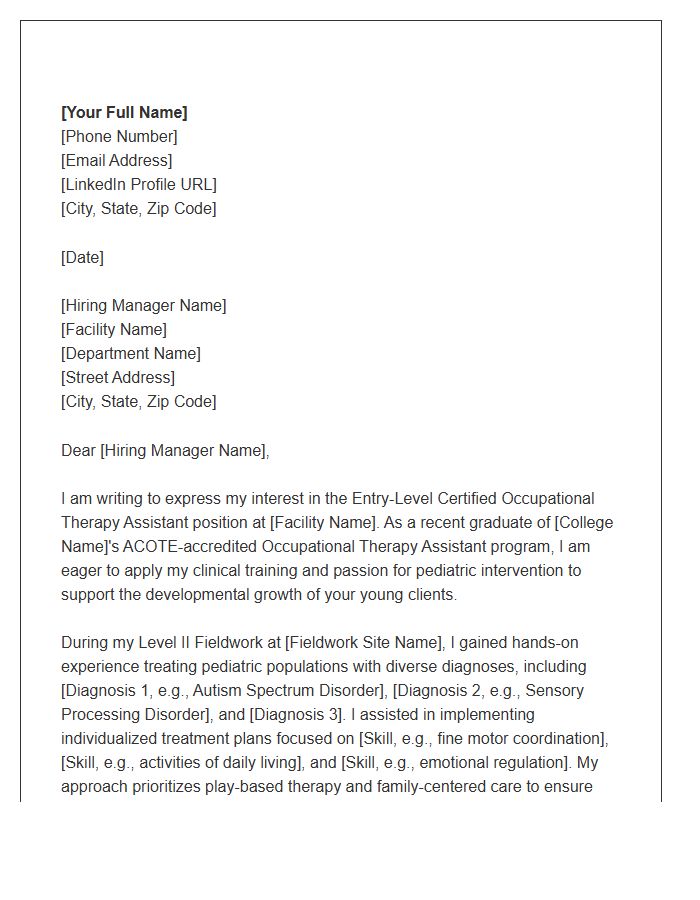
Finding your first job as a Certified Occupational Therapy Assistant (COTA) in pediatrics requires a cover letter that balances clinical skills with genuine empathy. This template works because it leverages your Level II Fieldwork-the critical internship phase where you gained hands-on experience-to prove your competency despite being entry-level. By highlighting specific pediatric interventions and evidence-based practices (methods proven effective by scientific research), you show hiring managers that you understand how to treat developmental delays through play. This structure follows a family-centered care model, which is a gold standard in therapy focusing on the child's entire support system. It is designed to pass through Applicant Tracking Systems (ATS) by including keywords like "ACOTE-accredited" and "sensory processing." Using this template ensures you demonstrate 100% readiness to manage a caseload immediately. Tip: Always mention a specific piece of equipment or a program the clinic uses to show you have done your research!
New Graduate Occupational Therapy Assistant Cover Letter Template
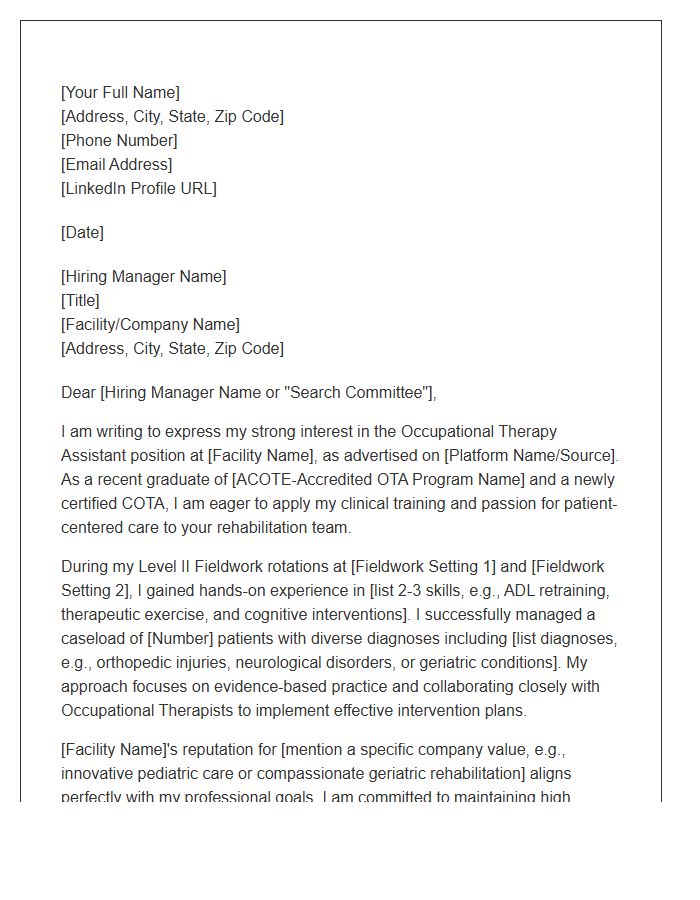
Landing your first role as a COTA requires a New Graduate Occupational Therapy Assistant Cover Letter that bridges the gap between classroom theory and clinical practice. This template works by focusing on Level II Fieldwork-the intensive, on-site rotations where you gained real-world experience. By quantifying your impact, such as listing a specific caseload (the number of patients managed daily), you provide data that proves you are ready for a full-time productivity pace. The structure emphasizes ADLs (Activities of Daily Living) and interventions to show hiring managers you possess the practical skills needed to assist an Occupational Therapist immediately. This conversational yet professional approach helps you stand out in a competitive healthcare market. It transforms your academic background into a compelling narrative of readiness and reliability. Note: Always customize the "Facility Values" section to show you have researched their specific clinical specialty or mission statement.
Entry Level Occupational Therapy Assistant Cover Letter Template For Skilled Nursing
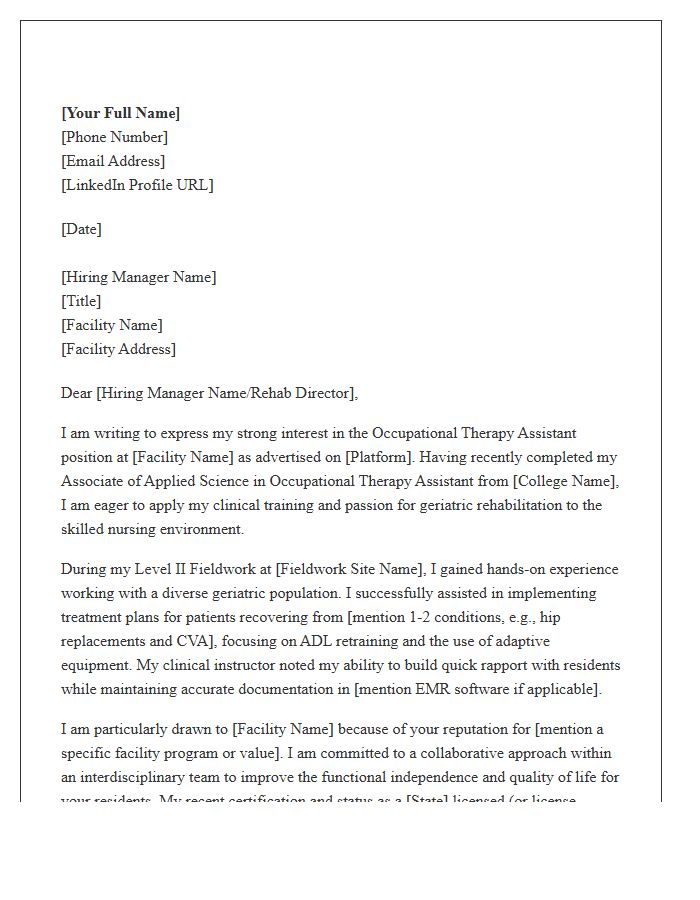
Finding your first role in a Skilled Nursing Facility (SNF)-a clinic providing 24-hour medical care and geriatric rehabilitation-can be challenging. This template works because it bridges the gap between your classroom learning and clinical reality. It highlights your Level II Fieldwork, which is the essential hands-on training required for licensure, ensuring hiring managers see your practical experience rather than just your degree. By specifically mentioning ADL retraining (Activities of Daily Living) and CVA recovery (stroke rehabilitation), you demonstrate a mastery of the industry glossary and the specific needs of elderly residents. The structure focuses on your ability to use Electronic Medical Records (EMR) and collaborate with an interdisciplinary team, two key data points facilities look for in new hires. This approach proves you are "work-ready" despite being entry-level. Note: Always customize the specific conditions you treated during fieldwork to match the common diagnoses found at the specific facility where you are applying.
Acute Care Occupational Therapy Assistant Cover Letter Template
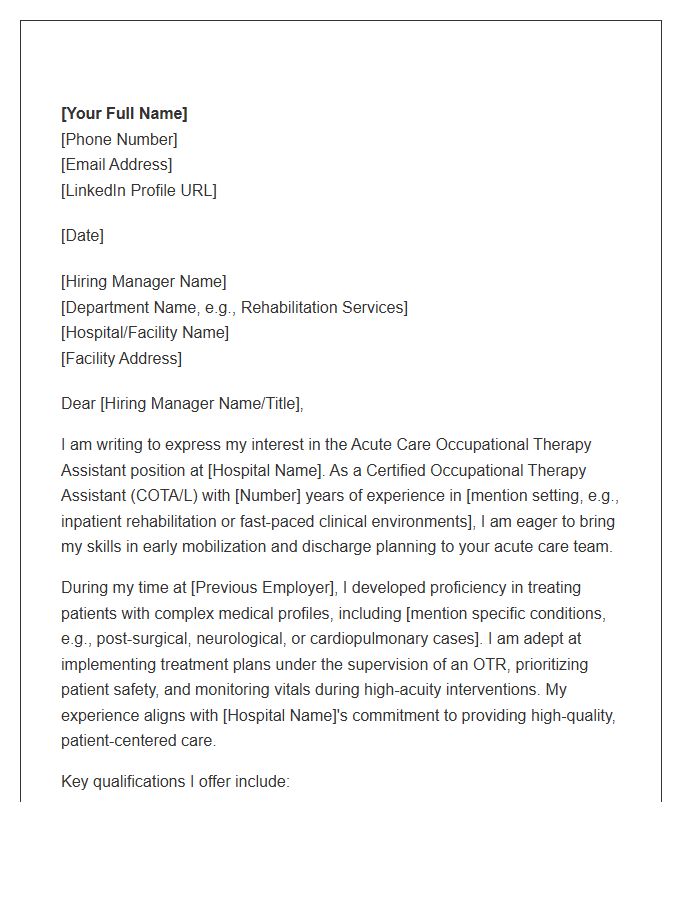
This Acute Care Occupational Therapy Assistant Cover Letter Template is a professional tool designed to help you secure a role in high-intensity hospital settings. It works by utilizing a structured layout that emphasizes your ability to handle early mobilization-the practice of starting physical activity as soon as a patient is medically stable. By focusing on discharge planning and high-acuity interventions (care for patients with unstable or severe medical conditions), the template signals to hiring managers that you can manage rapid patient turnover effectively.
The conversational yet clinical tone highlights essential data, such as your COTA/L (Certified Occupational Therapy Assistant) credentials and BLS (Basic Life Support) certification. This format is effective because it bridges the gap between technical skill and the collaborative nature of a multidisciplinary medical team. It ensures you demonstrate proficiency in ADL training (Activities of Daily Living) while maintaining a patient-centered approach.
Note: Always customize the specific medical conditions mentioned to match the hospital's primary specialties, such as orthopedics or neurology.
Entry Level School Based Occupational Therapy Assistant Cover Letter Template
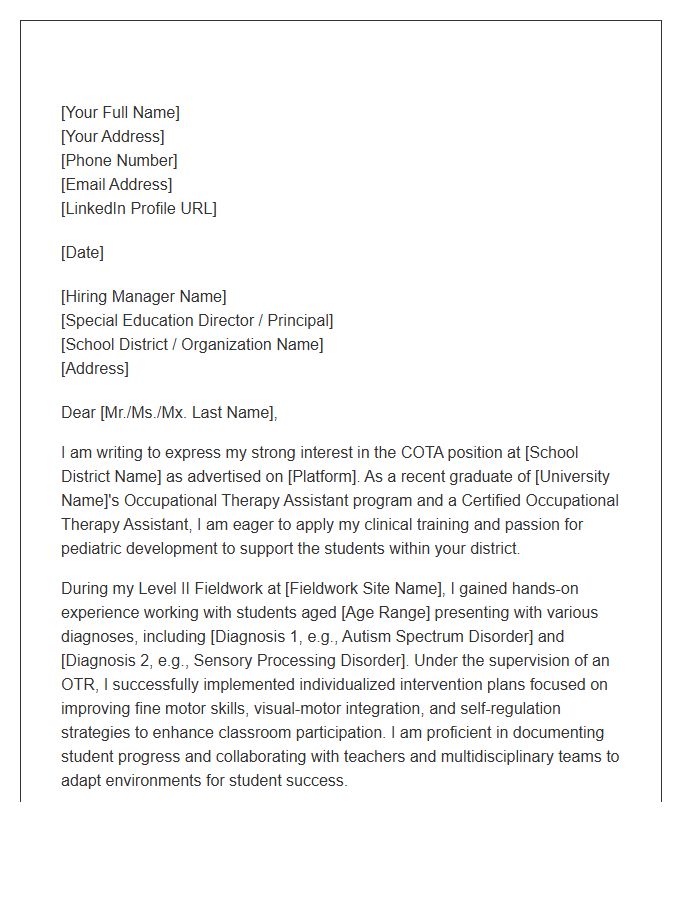
Landing your first role as an Entry Level School Based Occupational Therapy Assistant requires a cover letter that balances clinical knowledge with a passion for education. This template works by focusing on your Level II Fieldwork-the hands-on clinical rotations where you practiced interventions (therapeutic activities) under professional supervision. By emphasizing your ability to handle a multidisciplinary team (a group of diverse professionals like teachers and speech therapists), you demonstrate readiness for the collaborative nature of a school district. Statistics show that highlighting specific pediatric experience, such as sensory processing or fine motor development, helps candidates stand out in a competitive COTA (Certified Occupational Therapy Assistant) applicant pool. This structure ensures you bridge the gap between being a student and a professional practitioner. Note to remember: Always customize the "district values" section to prove you have researched their specific inclusion policies or special education initiatives.
Home Health Occupational Therapy Assistant Cover Letter Template
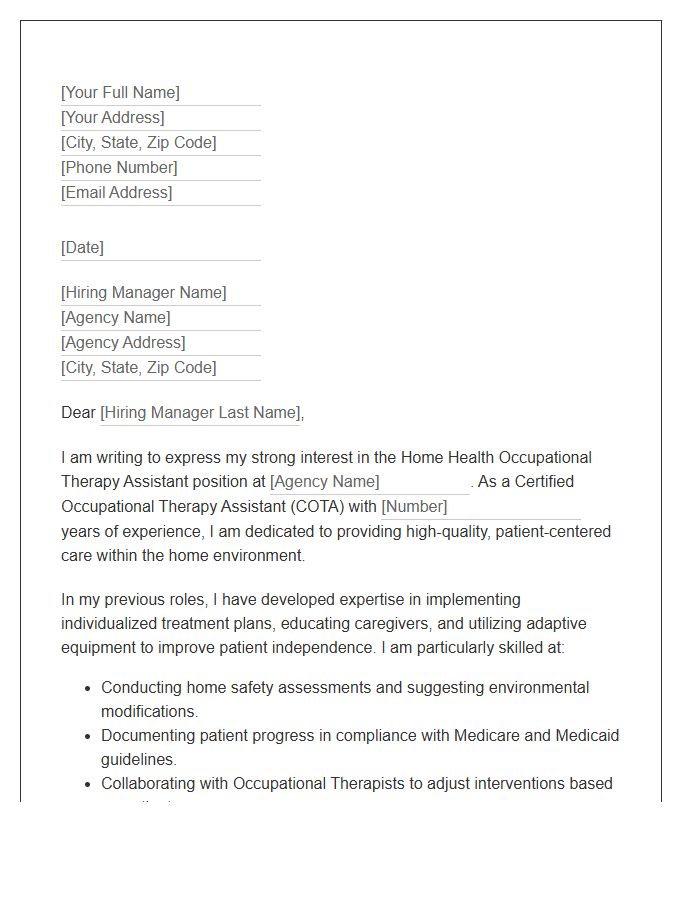
Landing a role in mobile healthcare requires a specialized approach, and this Home Health Occupational Therapy Assistant Cover Letter Template is designed to do exactly that. It works by emphasizing your ability to deliver patient-centered care outside of a clinical setting, focusing on the autonomy required for home visits. The structure highlights your proficiency in environmental modifications (adjusting a patient's home for safety) and ADL training (Activities of Daily Living, like dressing or bathing). Agencies prioritize candidates who understand Medicare compliance and possess strong documentation skills, as these ensure the agency is reimbursed correctly. By using this template, you demonstrate that you are not just a therapist, but a reliable professional capable of managing a flexible schedule and traveling efficiently. It bridges the gap between clinical expertise and the unique logistical demands of home health. Note: Always mention your specific COTA certification status and your comfort level with independent travel to stand out immediately.
Geriatric Occupational Therapy Assistant Cover Letter Template For Beginners
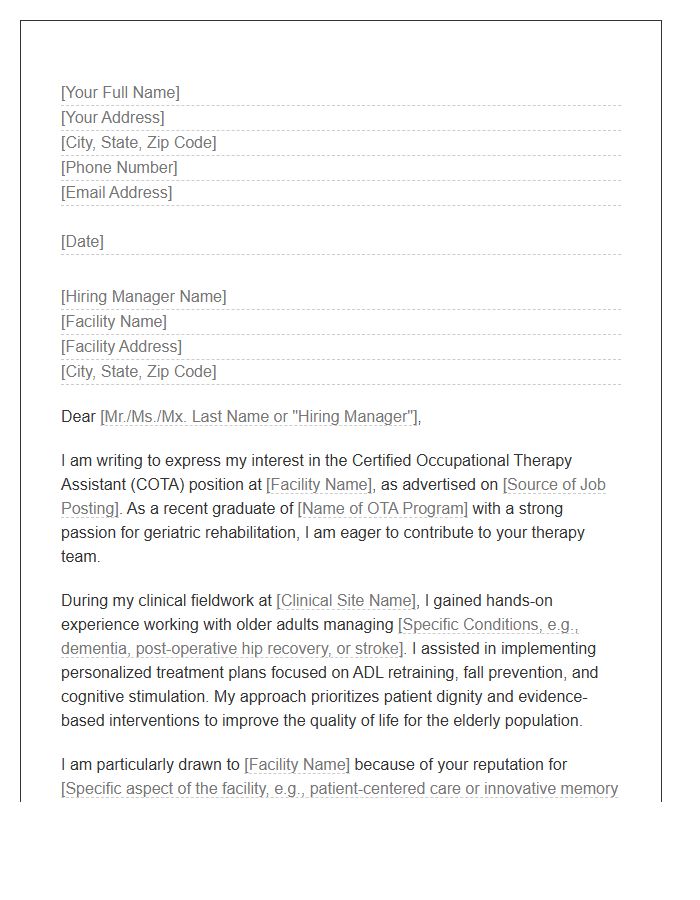
Finding your first role in senior care is easier with this Geriatric Occupational Therapy Assistant Cover Letter Template. Designed specifically for new graduates, this tool helps you bridge the gap between clinical rotations and a full-time career. It works by structuring your fieldwork-the supervised practical experience required for licensure-into a narrative that highlights your hands-on skills. In the geriatric field, hiring managers look for candidates who understand ADLs (Activities of Daily Living), such as dressing or bathing, and evidence-based interventions, which are treatments backed by scientific data. By using this template, you emphasize your NBCOT certification readiness and your ability to improve patient independence. This structure is effective because it shifts the focus from a lack of "work history" to your specialized training in fall prevention and cognitive care. Remember to research the specific facility's mission statement to customize the middle paragraph for a more personal touch.
Entry Level Outpatient Rehab Occupational Therapy Assistant Cover Letter Template
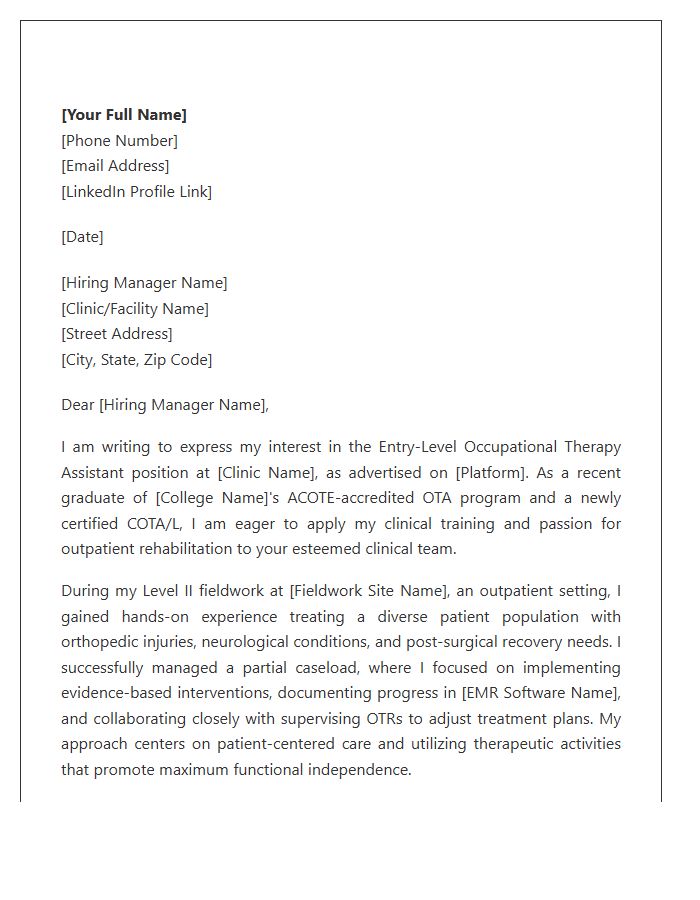
Landing your first role requires a Cover Letter Template that balances your academic clinical hours with professional enthusiasm. This template works because it uses a structured hierarchy to showcase your Level II Fieldwork experience-the real-world training where you managed actual patient caseloads. By mentioning specific EMR (Electronic Medical Record) software and ACOTE (Accreditation Council for Occupational Therapy Education) standards, you signal to hiring managers that you are "clinic-ready" despite being entry-level. The conversational tone helps build a rapport-the essential bond between therapist and patient-before you even step into the interview. It highlights data-driven results, such as your ability to implement evidence-based interventions that improve functional independence. This approach shifts the focus from what you haven't done yet to the specific OTR (Occupational Therapist Registered) collaboration skills you already possess. Note: Always customize the "clinic specialty" section to show you have researched their specific patient demographic.
Inpatient Rehabilitation Occupational Therapy Assistant Cover Letter Template
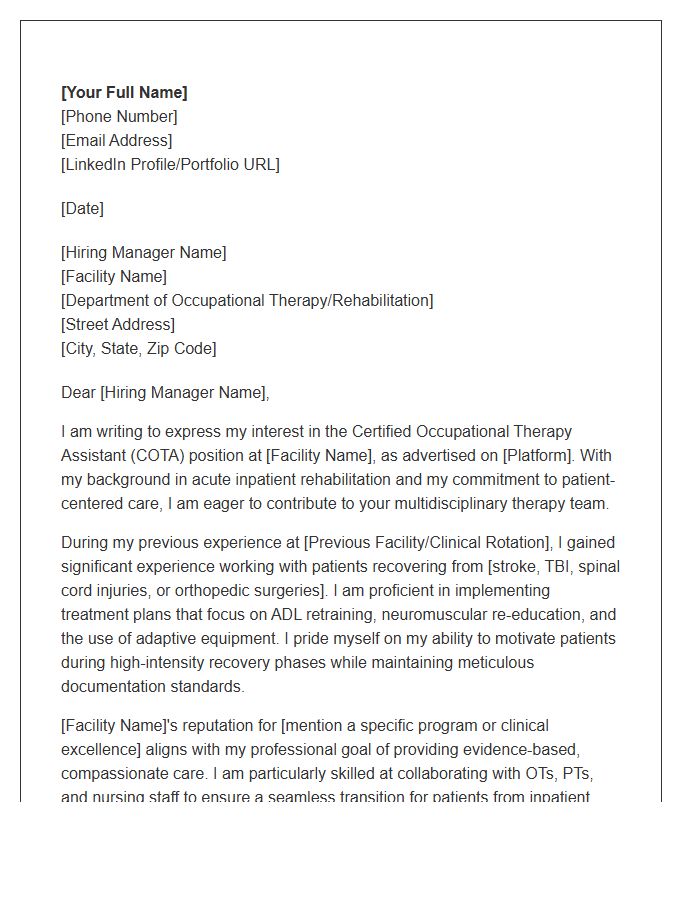
This Inpatient Rehabilitation Occupational Therapy Assistant Cover Letter Template is designed to help COTAs secure roles in fast-paced medical settings. It works by emphasizing your ability to handle high-intensity recovery cases and your proficiency in ADL retraining (Activities of Daily Living), which are essential for Inpatient Rehab success. By highlighting neuromuscular re-education and collaborative skills, the template proves you can manage a multidisciplinary approach alongside OTs and PTs. This format is effective because it balances clinical expertise with the soft skills needed for patient motivation. To optimize your application, ensure you mention specific experience with Electronic Health Records (EHR) and your COTA/L licensure status to clear initial screening filters. Remember, data shows that mentioning specific patient populations, like those recovering from a TBI (Traumatic Brain Injury), significantly increases your chances of getting an interview. Note: Always customize the "Facility Reputation" section to show you have researched their specific clinical programs.
Mental Health Occupational Therapy Assistant Cover Letter Template
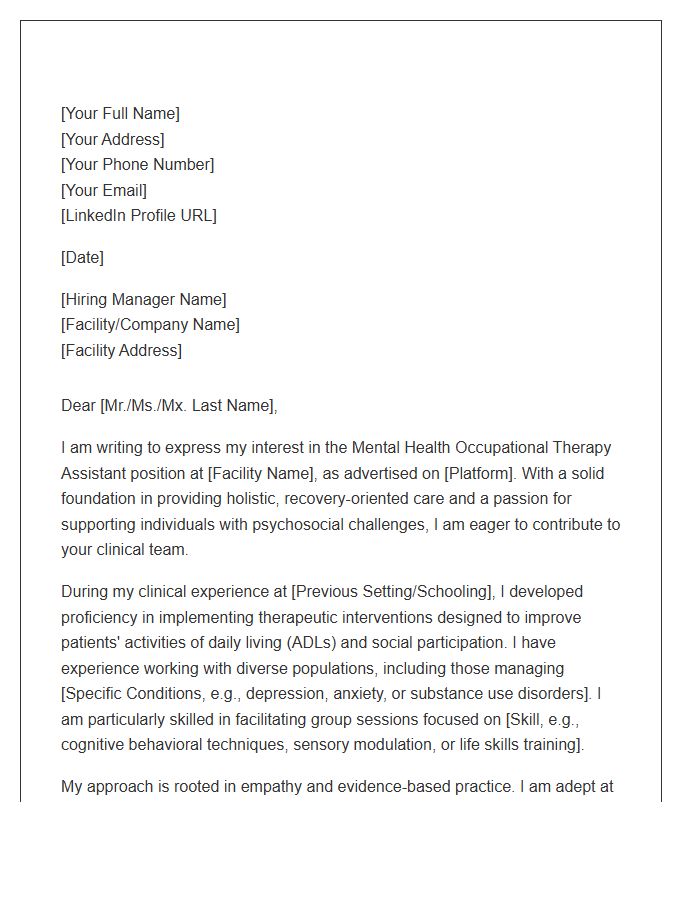
Finding the right role in behavioral health requires a resume that speaks to both heart and science. This Mental Health Occupational Therapy Assistant Cover Letter Template is designed to showcase your ability to deliver recovery-oriented care. It works by structuring your clinical experience around ADLs (Activities of Daily Living) and psychosocial interventions, which are the benchmarks hiring managers look for. By using this layout, you provide hard data regarding your experience with specific populations, such as those managing sensory modulation issues or substance use disorders. This professional yet conversational approach bridges the gap between technical rehabilitation skills and the empathy required for mental health advocacy. The template is semantically optimized to pass through Applicant Tracking Systems (ATS) by highlighting essential Occupational Therapy terminology and regulatory compliance. Remember to customize the therapeutic interventions section to match the specific needs of the facility where you are applying.
Early Intervention Occupational Therapy Assistant Cover Letter Template
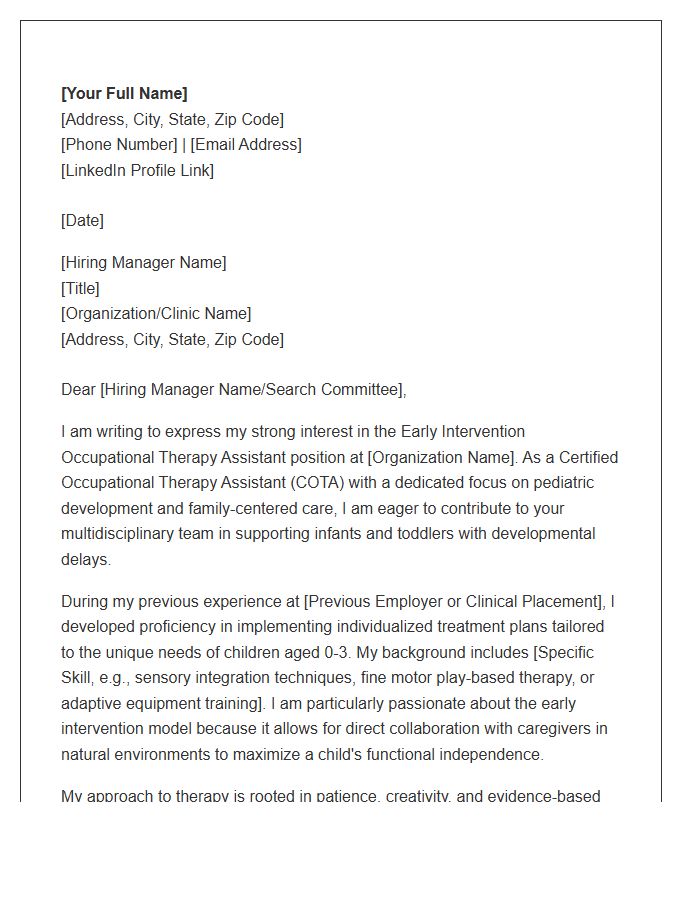
This Early Intervention Occupational Therapy Assistant Cover Letter Template is a strategic tool designed to help COTAs (Certified Occupational Therapy Assistants) secure roles working with children aged 0-3. It works by structuring your clinical experience into a conversational narrative that emphasizes Family-Centered Care-a Glossary term referring to a collaborative approach where therapists treat the child within the context of their home and family. The template highlights your ability to translate complex Individualized Family Service Plans (IFSP) into engaging, Play-Based Therapy sessions. By focusing on Natural Environments, you demonstrate an understanding of why early intervention is critical: it utilizes the child's daily routine to improve functional outcomes. Data shows that effective early intervention can reduce the need for special education later in life, making your role vital. Use this layout to showcase your documentation skills and multidisciplinary teamwork. Note: Always customize the specific sensory or motor skills mentioned to match the unique needs listed in the job description.
Pediatric Clinic Occupational Therapy Assistant Cover Letter Template
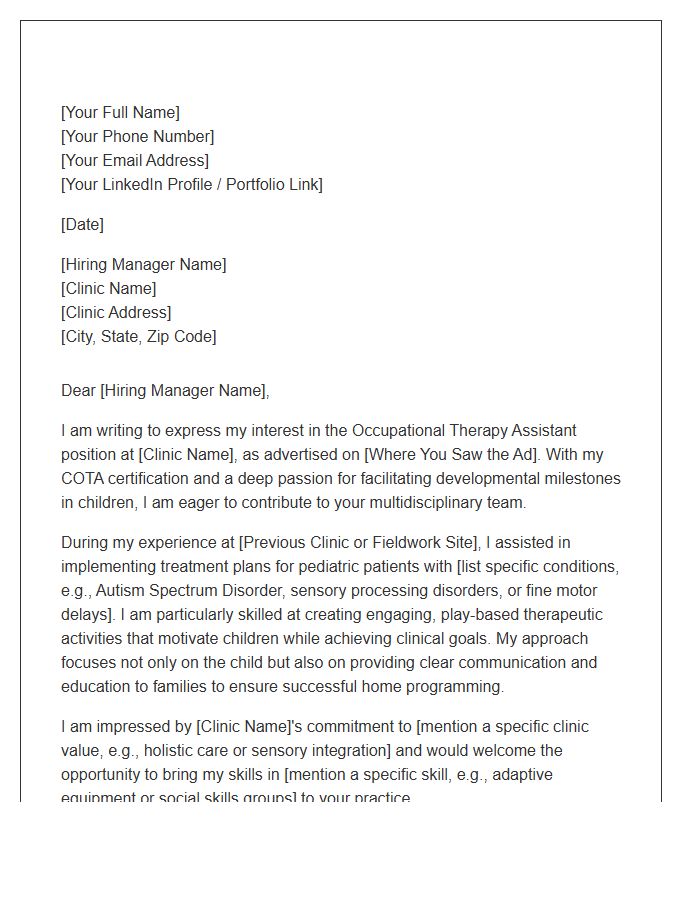
Finding the right role in child development starts with a strong Pediatric Clinic Occupational Therapy Assistant Cover Letter Template. This tool is designed to bridge the gap between your COTA (Certified Occupational Therapy Assistant) credentials and the specific needs of a clinical team. It works by structuring your experience around play-based interventions-the practice of using natural play to improve functional skills-and sensory integration, which helps children process environmental stimuli. By using this template, you highlight key data such as your ability to meet developmental milestones and your experience with multidisciplinary teams (groups of different healthcare professionals working together). This conversational yet professional layout ensures hiring managers see your passion for pediatric care and your technical proficiency in handling diverse diagnoses like ASD or fine motor delays. Use this framework to prove you can turn clinical goals into engaging activities for kids. Note: Always customize the "specific clinic value" section to show you have researched their unique therapeutic approach.
Physical Dysfunction Occupational Therapy Assistant Cover Letter Template
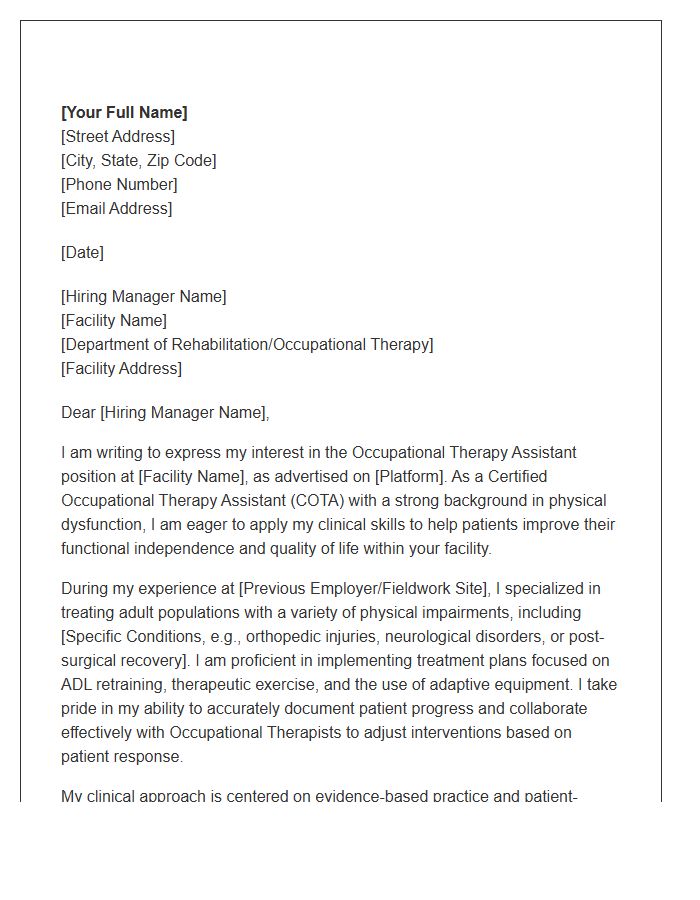
This Physical Dysfunction Occupational Therapy Assistant Cover Letter Template is a strategic tool designed to help you land a role in rehabilitative care. It works by structuring your clinical expertise into a narrative that emphasizes Functional Independence-the ability of a patient to perform daily tasks safely. The template focuses on your role as a COTA (Certified Occupational Therapy Assistant) in treating Physical Dysfunction, which refers to impairments caused by illness or injury that limit bodily movement. By highlighting your proficiency in ADL Retraining (Activities of Daily Living) and Therapeutic Exercise, you show hiring managers exactly how you provide value. This layout is effective because it bridges the gap between your technical skills and patient-centered outcomes, making your application stand out to busy recruiters. Use this to demonstrate how you collaborate with OTs to execute treatment plans that drive recovery data. Note: Always tailor the "Specific Conditions" section to match the facility's specialization, such as orthopedics or neurology, to show immediate relevance.
Hospital Based Entry Level Occupational Therapy Assistant Cover Letter Template
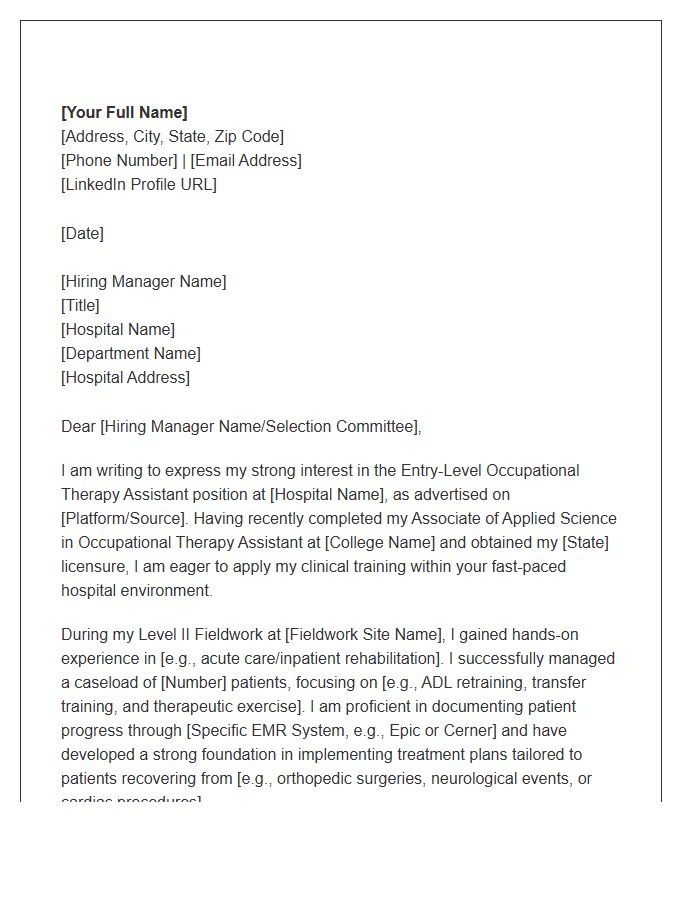
Landing your first role in a clinical setting requires a Hospital-Based Entry-Level OTA Cover Letter that bridges the gap between classroom theory and acute care practice. This template works because it emphasizes your Level II Fieldwork-the most critical data point for new grads-showing you can handle a real-world caseload of 5 to 8 patients daily. It highlights technical proficiency in EMR Systems (Electronic Medical Records) like Epic, which hospitals use to track ADL retraining (Activities of Daily Living). By focusing on interdisciplinary collaboration, you demonstrate an understanding of how OTAs work alongside nurses and PTs to ensure patient safety. This structure proves you are ready for the fast-paced inpatient rehabilitation environment from day one. Using this conversational yet professional approach helps you stand out to hiring managers looking for clinical readiness and empathy. Note: Always customize the specific medical procedures mentioned to match the specialized units of the hospital where you are applying.
Entry Level Occupational Therapy Assistant Cover Letter Template For Assisted Living
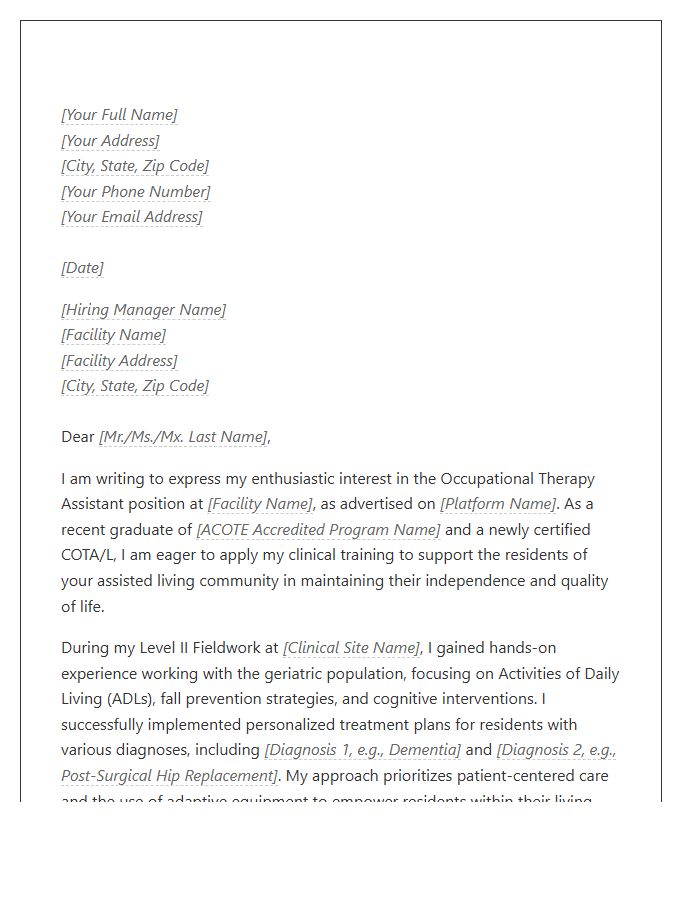
This Entry Level Occupational Therapy Assistant Cover Letter is designed to bridge the gap between your clinical rotations and a professional role in assisted living. It works by emphasizing your COTA/L certification (Certified Occupational Therapy Assistant) and Level II Fieldwork, which is the final phase of clinical training where students work full-time under supervision. The template highlights your ability to assist seniors with ADLs (Activities of Daily Living), such as dressing or grooming, and Cognitive Interventions, which are activities meant to support brain function and memory. This conversational approach allows you to showcase Patient-Centered Care, ensuring the hiring manager sees your empathy and technical skills. By mentioning specific ACOTE accredited training, you prove your education meets national standards. Note: Always customize the "Specific Program" section to mention the facility's unique amenities, like their memory care wing or fall prevention programs, to stand out.
Foundational Components of an OTA Cover Letter
An entry-level Occupational Therapy Assistant (OTA) cover letter must bridge the gap between academic theory and clinical application. Hiring managers seek candidates who understand the multifaceted nature of patient care and the administrative rigor required in modern healthcare facilities.
- Header: Professional contact information including LinkedIn profile.
- Salutation: Formal address to the Rehabilitation Director or Department Lead.
- Introduction: Statement of NBCOT certification status and state licensure eligibility.
- The "Why": Alignment with the facility's specific therapeutic philosophy.
Quantifying Fieldwork II Competencies
Data-driven narratives differentiate entry-level applicants. Instead of listing duties, focus on the volume of interventions and the specific demographics served during clinical rotations. Highlighting caseload management capability is critical for productivity requirements.
| Metric Category | Data Example | Impact Statement |
|---|---|---|
| Caseload Volume | 8-10 patients/day | Demonstrated high-productivity readiness in acute care settings. |
| Standardized Testing | MoCA, FIM, DASH | Conducted 25+ assessments to inform evidence-based POC. |
| Goal Attainment | 85% achievement rate | Facilitated functional independence in ADL-focused sessions. |
Integration of Advanced Therapeutic Terminology
Using industry-specific terminology demonstrates clinical literacy and professional readiness. Integrating these terms within the cover letter body shows an understanding of the Occupational Therapy Practice Framework (OTPF-4).
- Therapeutic Use of Self: The planned use of personality and insights to facilitate the rehabilitation process.
- Modalities (PAMS): Proficiency in Physical Agent Modalities such as ultrasound, electrical stimulation, or paraffin baths.
- Neuroplasticity: Designing interventions that leverage the brain's ability to reorganize following neurological insults.
- Adaptive Equipment (AE): Expertise in recommending and training patients on reachers, sock aids, or modified utensils.
Focusing on Specialized Clinical Settings
The requirements for an OTA vary significantly across practice settings. Your cover letter should prioritize data relevant to the specific environment of the hiring facility, whether it be Skilled Nursing Facilities (SNF), pediatrics, or outpatient clinics.
- Geriatrics/SNF: Focus on Fall Risk Assessment, transfer training, and dementia management strategies.
- Pediatrics: Emphasize Sensory Processing Disorder (SPD) interventions and Individualized Education Program (IEP) collaboration.
- Physical Disabilities: Highlight Upper Extremity (UE) rehabilitation and neuromuscular re-education.
Final Synthesis and Call to Action
The conclusion must reiterate your commitment to interprofessional collaboration and continuing education. Ensure the closing emphasizes your readiness to contribute to the multidisciplinary team immediately upon hire.
| Documentation Proficiency | Experienced in EMR systems (Epic, NetHealth, Casamba) ensuring HIPAA compliance and ICD-10 accuracy. |
| Collaboration | Active participant in weekly interdisciplinary rounds with OTR/Ls, PTs, and SLPs. |
| Availability | Open to flexible scheduling including weekends to meet facility census demands. |
Note: Sometimes the .PDF file interface can be slightly different from the image preview. Our apology for this inconvenience.

Comments